Guides explaining why banks restrict accounts, what a restricted bank account means, how long restrictions last, and what steps can restore normal account access. These articles cover common triggers such as security monitoring, unusual transactions, verification reviews, and temporary banking limitations.
Quick answer: Bank of America restricts accounts when its automated fraud monitoring system detects activity that deviates from your account’s established pattern or matches a known fraud or compliance risk profile. Common triggers include unusual transfers, Zelle and Zelle-related payment activity, large deposits from new sources, new login devices, and pass-through patterns. Most Bank of … Read more
Quick answer: Chase restricts bank accounts when its automated fraud monitoring system — called Chase Fraud Protection — detects activity that falls outside your account’s established pattern or matches a known risk profile. Common triggers include unusual transfers, Zelle payments to new recipients, large deposits from unfamiliar sources, new login devices, and pass-through activity. Most … Read more
Quick answer: When a bank account is described as “limited,” it means the financial institution has temporarily restricted one or more account functions while it verifies activity, confirms your identity, or reviews a potential security or compliance concern. The word “limited” is used most commonly by online banks, fintechs, and platforms like Chase, Chime, and … Read more
Quick answer: A limited bank account means the bank has temporarily suspended certain features — most commonly outgoing transfers, Zelle payments, or debit card access — while it reviews activity, verifies your identity, or applies a compliance check. “Limited” is the terminology used most commonly by Chase, Chime, PayPal, and other fintech platforms. It means … Read more
Quick answer: You cannot completely prevent bank account restrictions — the monitoring systems that trigger them are deliberately sensitive, and legitimate activity sometimes trips them. But you can significantly reduce the probability by making your account behavior more predictable to the monitoring system, giving the bank context before unusual transactions occur, and maintaining account patterns … Read more
Quick answer: Bank account restrictions are triggered when automated monitoring systems detect activity that either deviates significantly from your account’s established behavior or matches a known fraud or compliance risk pattern. The triggers are not random — they fall into specific, predictable categories. Understanding exactly what those categories are, and why certain activities reliably trip … Read more
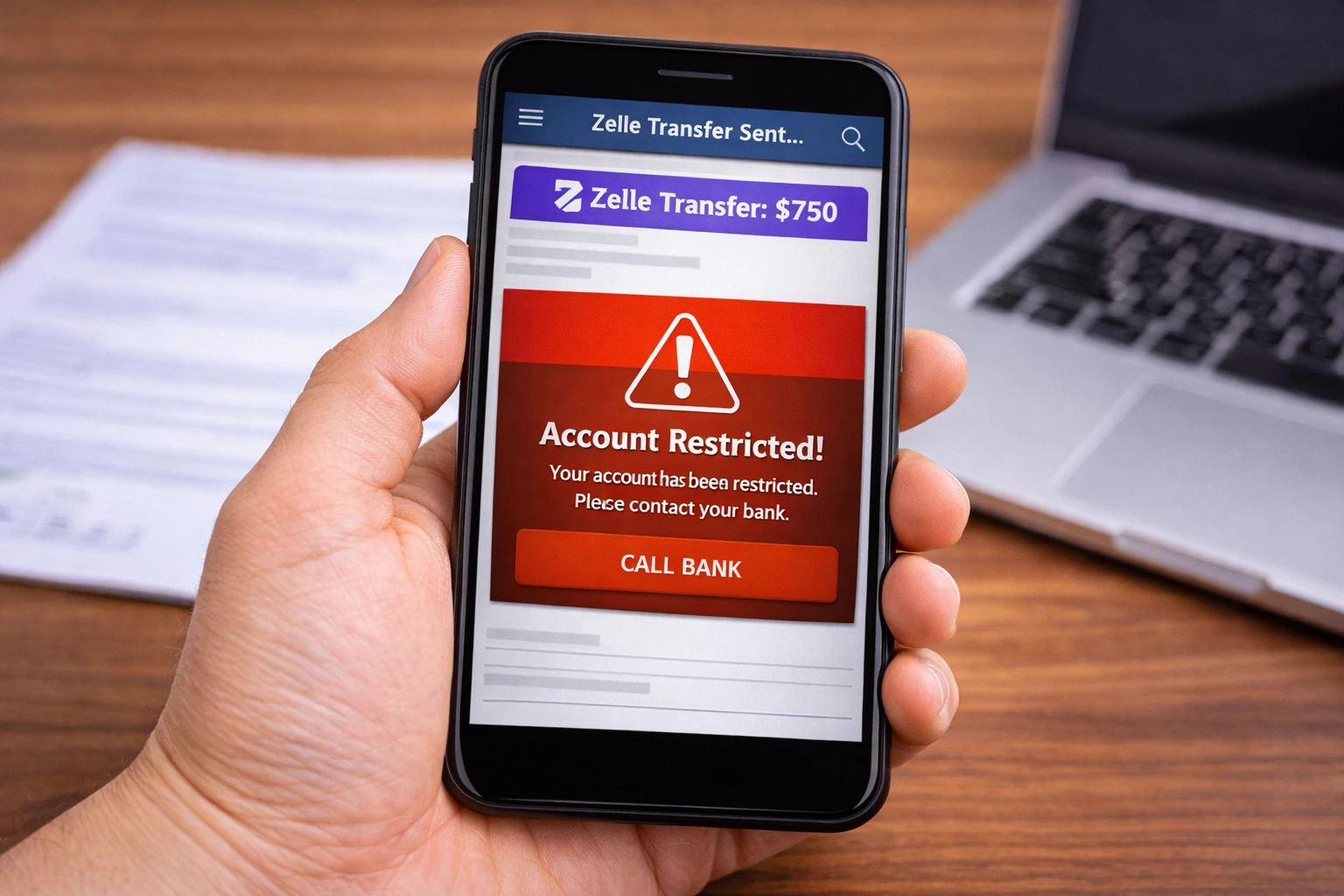
Quick answer: If your bank account was restricted after a Zelle payment, the transfer triggered an automated fraud or security review. Zelle is monitored at a lower flagging threshold than traditional bank transfers because payments are instant and essentially irreversible — making Zelle activity one of the most common restriction triggers at major banks. Most … Read more
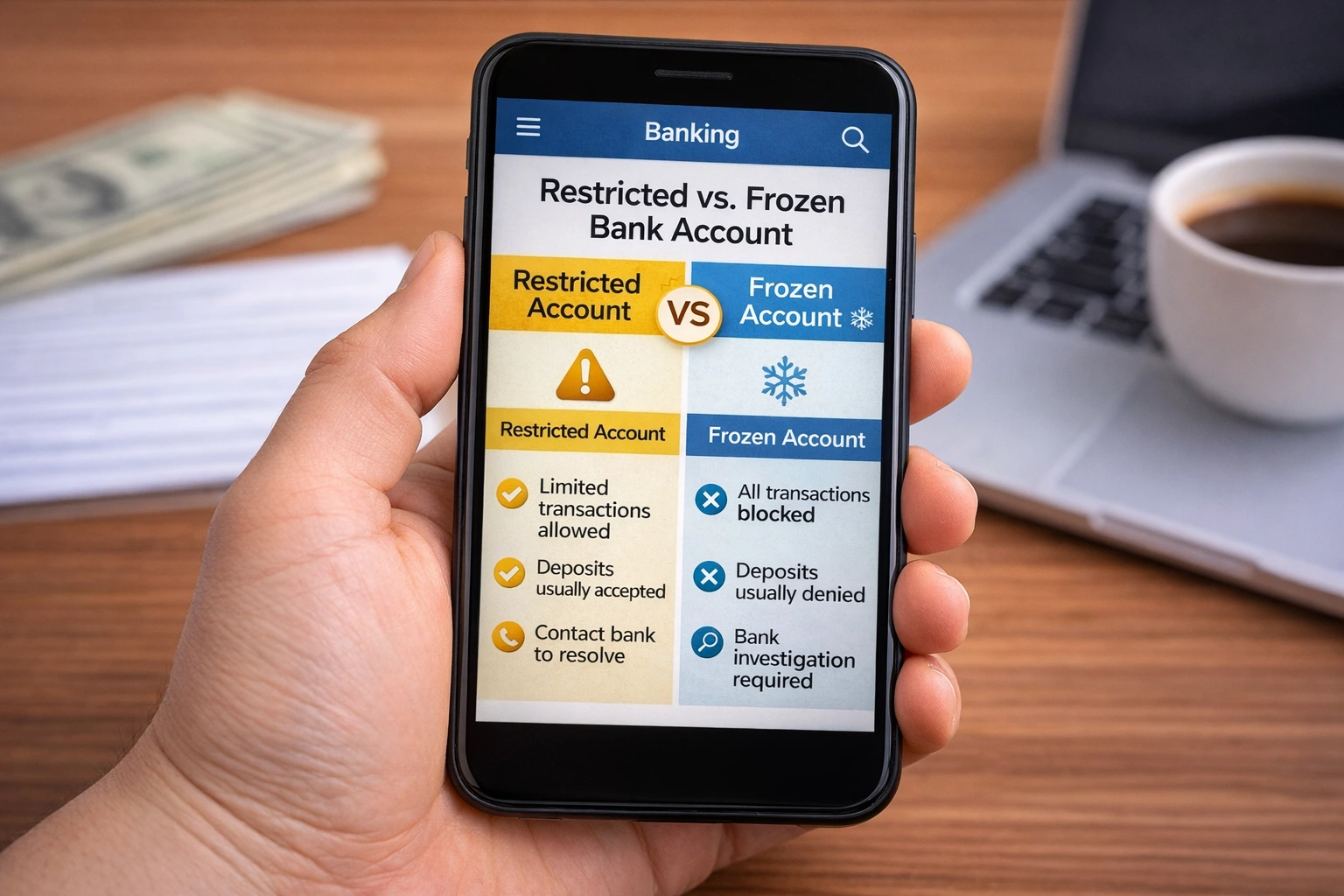
Quick answer: A restricted bank account means some account functions have been temporarily suspended while the bank conducts a review — other functions often still work. A frozen bank account means most or all account activity has been suspended, including both outgoing and sometimes incoming transactions. Freezes are more severe than restrictions, are associated with … Read more
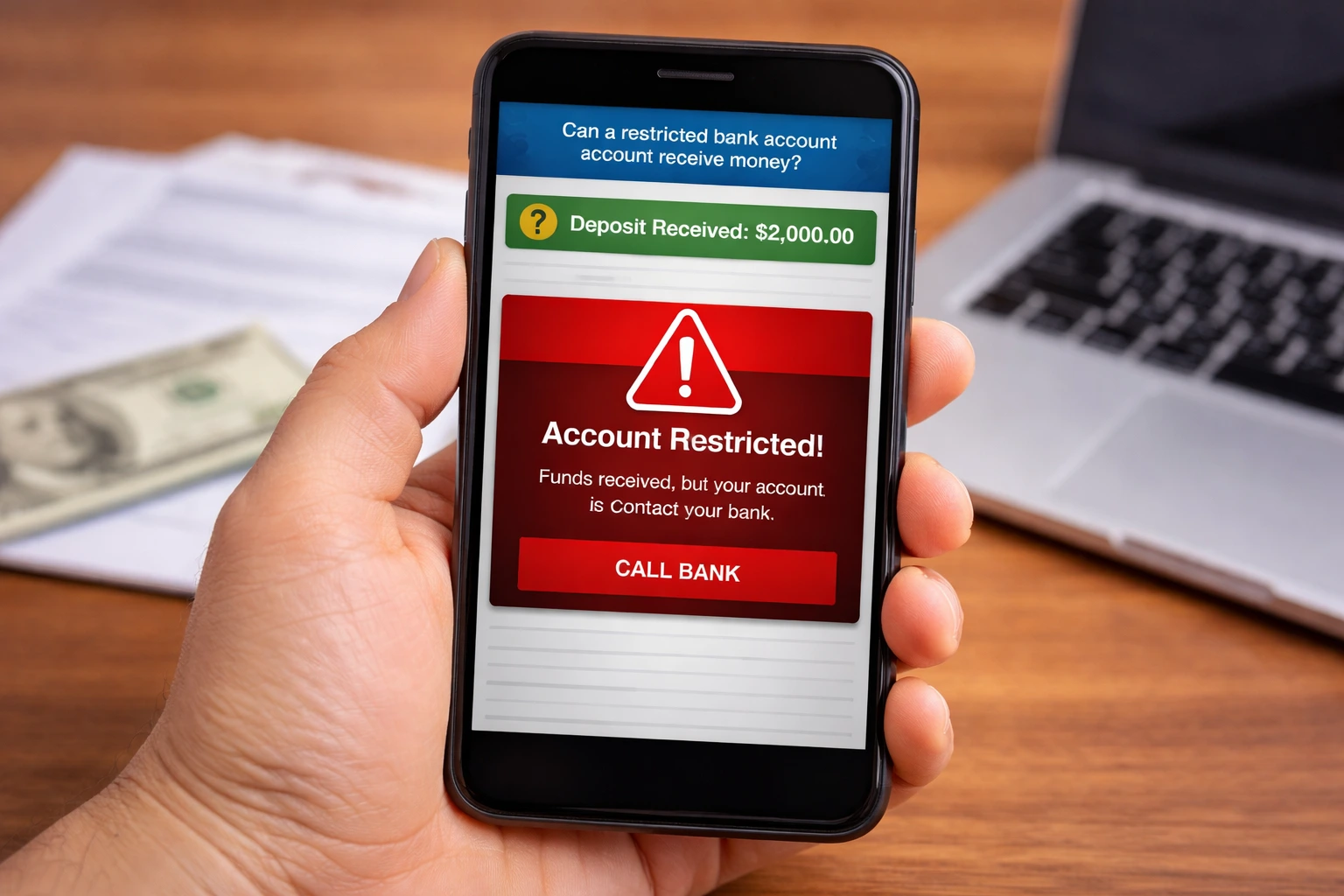
Quick answer: In most cases, yes — a restricted bank account can still receive money. Restrictions are designed primarily to control outgoing activity, not incoming deposits. However, whether you can actually access or use those incoming funds depends on the type of restriction and the specific deposit method. Some deposits post and are immediately accessible; … Read more
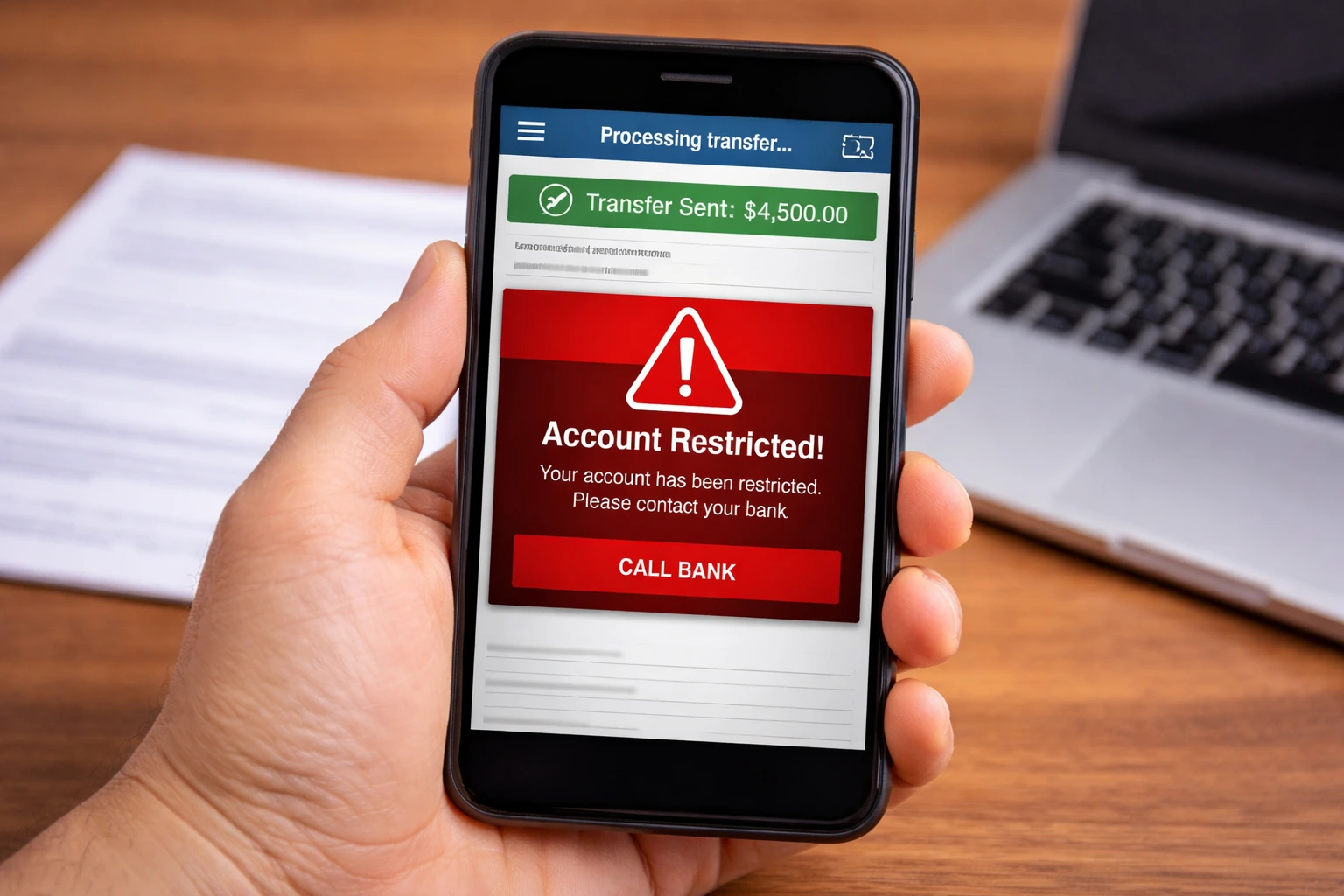
Quick answer: A bank account restricted after a transfer means the transaction triggered an automated fraud or security review. The transfer itself may have already gone through — the restriction is applied to prevent additional transactions while the bank evaluates whether the activity is consistent with your account’s normal behavior. Most transfer-related restrictions resolve within … Read more